

Your 3D work should be easy for customers to explore. A product they can turn around, a space they can walk through or a proposal they can understand from different angles can make a stronger impression than another set of static images.
Interactive 3D on the web brings that experience to a link. The challenge is preserving the visual quality you have invested in while making it practical for your audience’s phones, tablets and computers.
At optml.io, we start with your existing 3D scene and the experience you want to offer. We then choose how to deliver it: optimizing the models, preparing a high-quality visual representation, streaming a demanding application, or combining approaches where it makes sense.
Start with the customer experience
A 3D product configurator, virtual showroom and architectural visualization serve different purposes. Before choosing the technology, decide what people should be able to do.
- Explore: inspect a product, walk through a space or understand a site.
- Choose: compare finishes, switch options or change a configuration.
- Review: examine a design and see the details that matter to a decision.
Then define where it needs to work and what a good experience feels like. How quickly should the scene open? How smoothly should it respond? Which visual details must stay clear? These requirements give the project a useful target and keep the technology choices focused on your audience.
Make more of the 3D models you already have
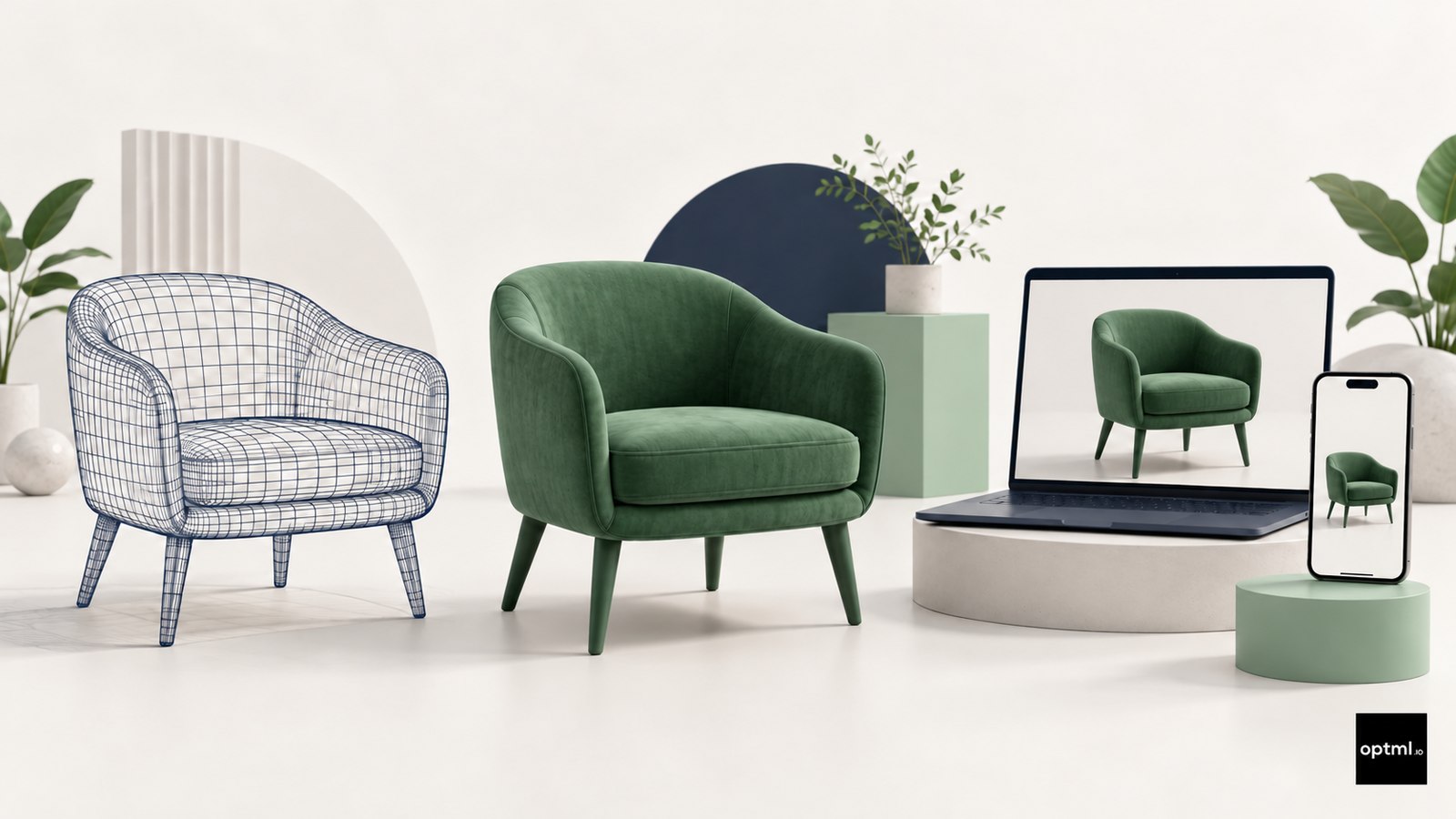
For most projects, our starting point is the 3D model, often described technically as a mesh. Keeping that structure is useful when people need to select objects, change materials or interact with individual parts.
The right starting material depends on your priorities. CAD provides a reference when dimensions matter. AI model generators such as Tripo can help create starting assets. 3D artists bring control over appearance, composition and the details that make a scene convincing. We can work with those sources together, checking accuracy where the experience requires it.
The next step is making the scene suitable for browser-based 3D. We optimize the detail, textures and rendering work around the devices you want to reach, while protecting the features your customers need to see.
This is often the most direct route to a flexible, interactive experience. We test loading speed and responsiveness as well as appearance, so a scene that looks good in a presentation also works when a customer opens it.
Bring the visual quality with you
Some scenes are valuable because of their finished appearance: an architectural interior, a carefully lit showroom or a detailed landscape. Reproducing all of that visual work live on a phone may be impractical.
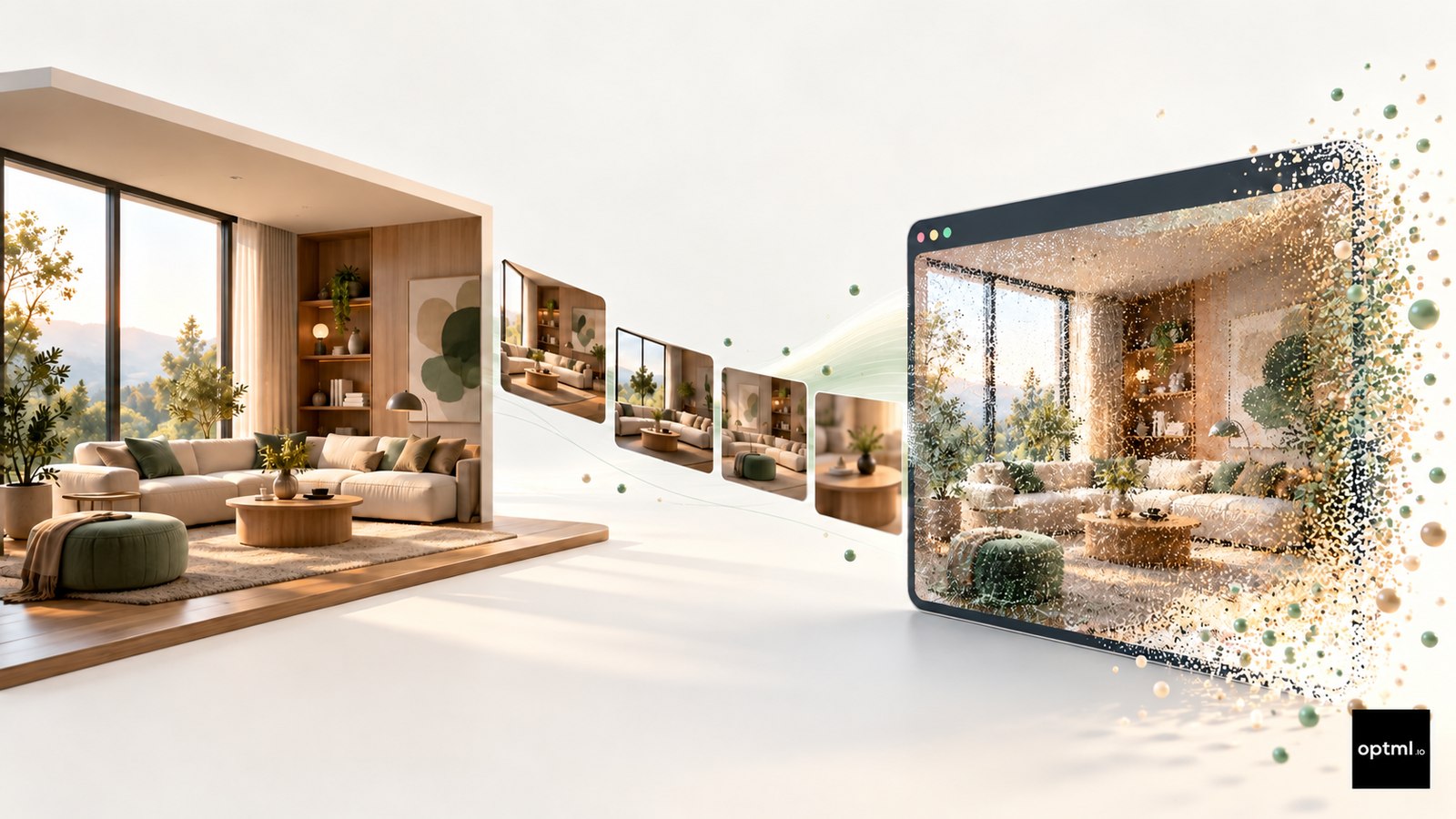
One option is to create high-quality views offline, including with path tracing, and use them to prepare a visual representation for interactive viewing. Gaussian splatting, also called 3DGS, is one technique we can evaluate for this.
The opportunity is to carry a similar visual impression into the browser without repeating the original rendering work on each visitor’s device. It can suit experiences where people explore an approved scene rather than continually redesign it.
We check the result against the views and details that matter to your audience. If changing lighting, materials or exact measurements is central to the experience, we account for that separately rather than assuming a visual representation replaces the original model.
See our high-detail 3D scene example for more on this approach.
Keep demanding rendering on the server
Sometimes the best route is to keep the full application running on a powerful server and let customers control it through a browser. This is pixel streaming: the server sends rendered images, and the customer’s inputs travel back.
It offers another way to deliver an existing 3D scene, particularly when its rendering quality or application features are difficult to reproduce on the audience’s devices. It can support ray-traced visuals and, where the application and hardware allow, path-traced output.
For your business, the decision includes ongoing server costs, expected audience size and the quality of the connections customers will use. The quality and responsiveness of a demanding scene still need testing; streaming does not make the rendering work disappear.
The distinction is straightforward: a baked visual experience prepares much of the appearance in advance; pixel streaming renders the application remotely while the customer uses it. We can assess which better fits your experience and operating budget.
Let larger scenes load as people explore
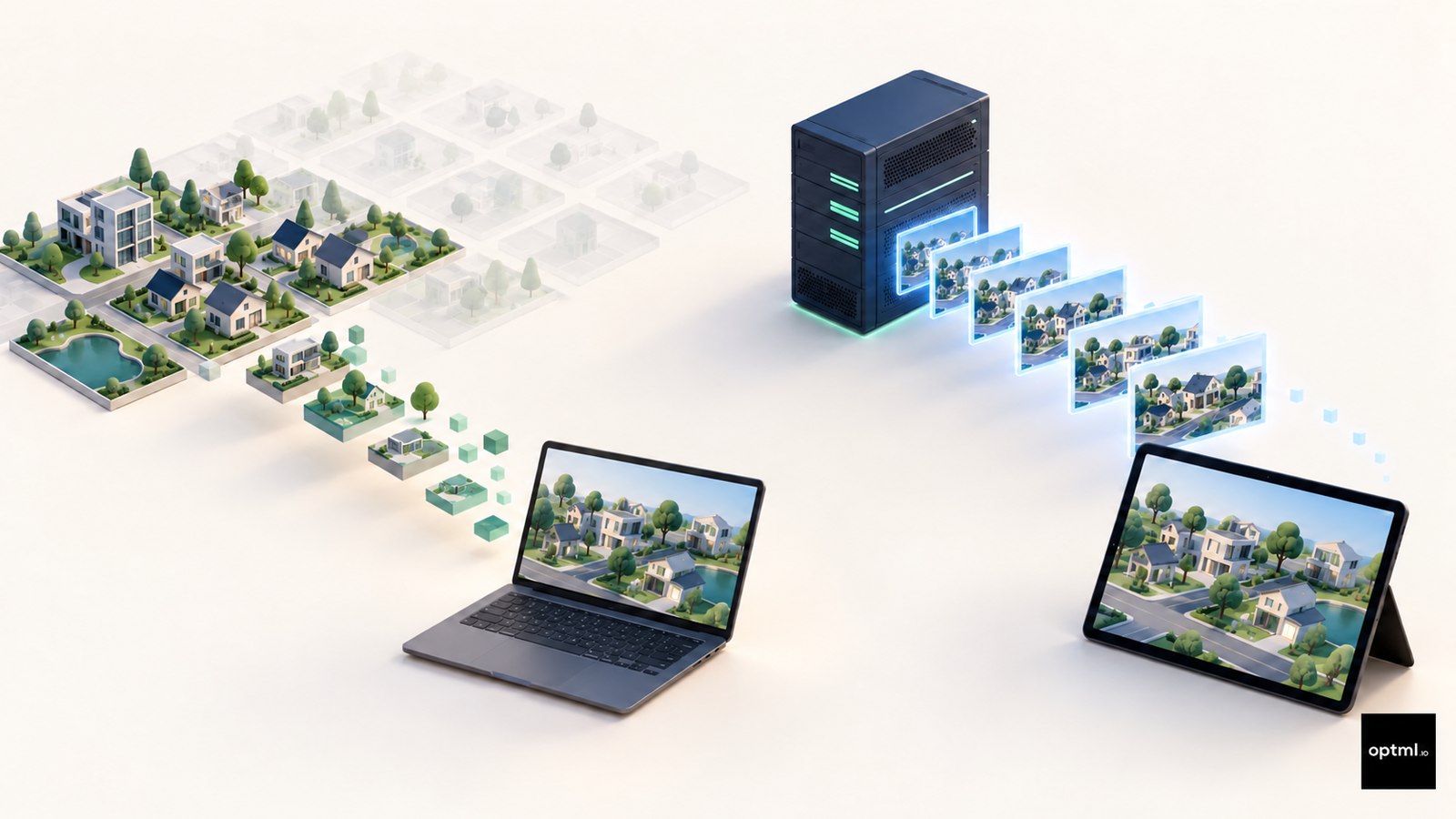
A large development, landscape or collection of spaces may not need to arrive all at once. Scene streaming lets the experience load the relevant parts as people move through it.
We can use this approach with mesh-based scenes and, with suitable preparation and viewer support, Gaussian splats. Unlike pixel streaming, the visitor’s device still renders the 3D content.
The aim is a more manageable opening download and memory footprint. We test the transitions as well as the first view, so the experience continues to make sense as visitors explore.
Choose against the experience and the budget
The most useful comparison is a representative part of your own scene, tested against your priorities:
- Visual quality: does it communicate the product, space or proposal convincingly?
- Reach: does it work on the devices and connections your audience uses?
- Interaction: can people explore and make the choices you need?
- Cost and upkeep: what will hosting, audience growth and future changes involve?
This gives you a concrete basis for choosing a web-based 3D visualization approach. You can see where optimizing the existing models is enough, where another representation helps and where server rendering earns its ongoing cost.
Get Started Today
Bring your 3D scene and the customer experience you have in mind. A representative model, a visual reference and a short description of what visitors should be able to do are enough to start the conversation.
We can help turn those requirements into a practical plan for an interactive 3D experience online. Book a session with optml.io to discuss your scene, your audience and the best route to putting it in their hands.